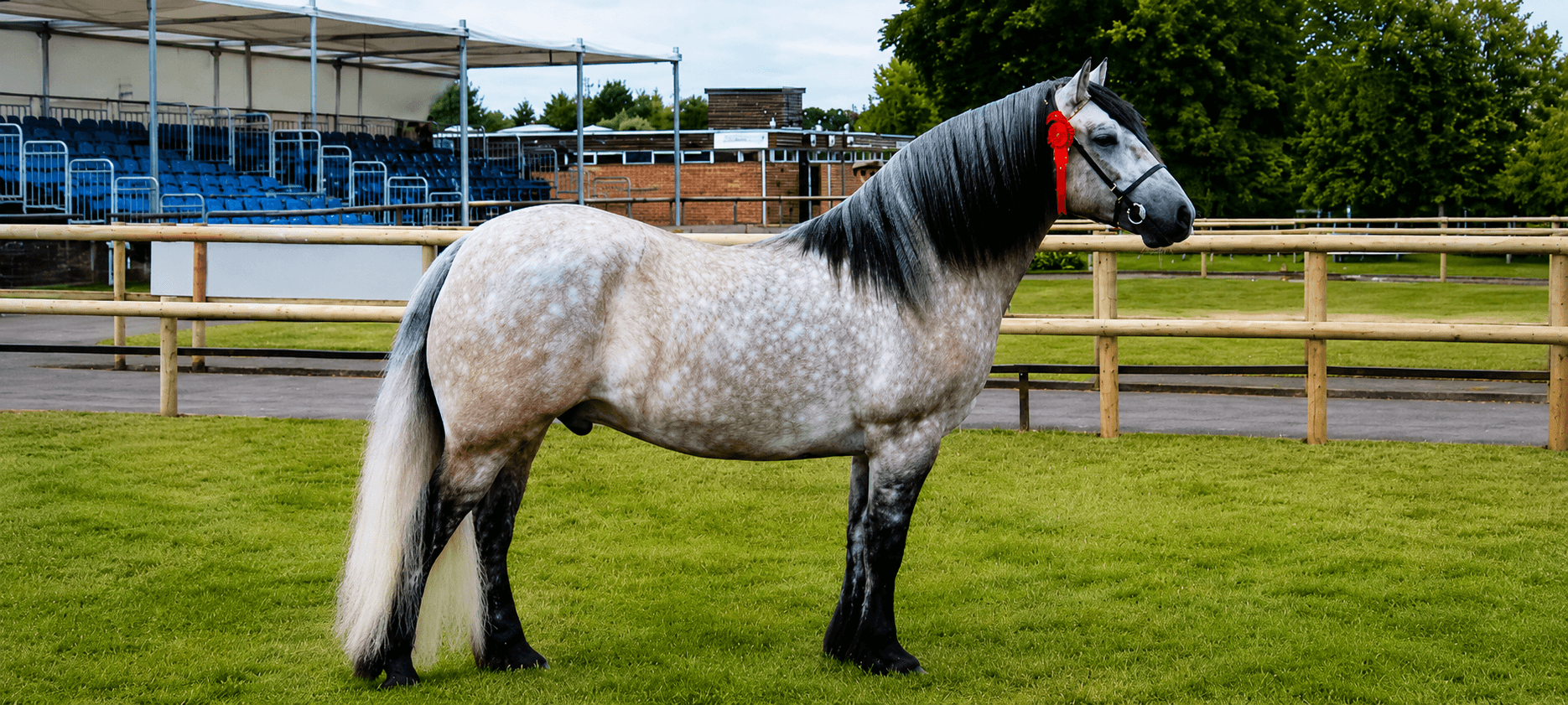
Breed Description
The characteristics of the Highland Pony
One of the two native pony breeds of the Scottish Highlands and Islands, adapted over centuries to the harsh Scottish climate.
The Highland Pony has evolved over centuries in the rugged Scottish Highlands, developing into a hardy, versatile breed renowned for its strength, sure-footedness, and gentle temperament. These ponies were traditionally used for all manner of work on Highland estates, from carrying deer off the hill to working the land.
A distinctive feature is their winter coat system: a layer of strong, badger-like hair over a soft, dense undercoat, enabling them to thrive in Scotland's harsh winters without the need for rugging.
Height
Not exceeding 14.2 hands (148cm). The breed is well-proportioned with a compact build showing strength without coarseness.
Build & Bone
Flat, hard bone with short cannon bones. Dark hoofs (some Western Isles ponies may have striped hoofs). Natural, flowing manes and tails.
Temperament
Known for a kindly nature and even temperament. Intelligent, willing workers that form strong bonds with their handlers.
Versatility
Capable as a ride, drive, and pack animal. Used for trekking, showing, driving, and traditional estate work.
Acceptable Colours
The breed standard accepts the following colours. Dorsal stripes and zebra leg markings are permitted. Broken colours (skewbald/piebald) are not permitted.
Mouse Dun
A soft grey-brown with dorsal stripe
Yellow Dun
Golden yellow with dark points
Cream Dun
Pale cream with darker mane and tail
Grey
Various shades from light to dark
Brown
Rich brown colouring
Black
True black without brown tints
Bay
Brown body with black points
Liver Chestnut
Occasional, with silver mane and tail
Detailed Breed Standard
Head
Well carried, alert with kindly eye. Broad between the eyes, tapering to the muzzle. The profile should be straight with well-defined nostrils.
Neck & Shoulders
A good length of neck with a well-arched crest in stallions. The shoulder should be well laid back with good withers.
Body
Compact with well-sprung ribs, deep through the girth, and strong, well-muscled loins and quarters. The back should be short and strong.
Legs & Feet
Legs should be flat-boned with short cannon bones and correctly set. Pasterns of medium length and slope. Feet should be well-shaped with hard, dark horn. Some feather at the fetlock is desirable but not excessive.
Movement
Free, straight action, using the shoulder and flexing the hocks, not dishing or throwing the feet outwards. The walk should be purposeful with good stride length.